Features
-
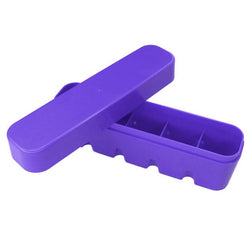
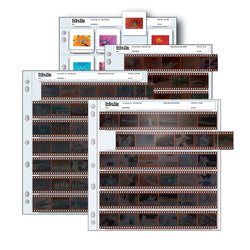
Full-border cassette options for 35mm and 120 film that show film borders, sprockets, rebate marks, and edge information for archival, proofing, and creative presentation
Format-specific cassette design supports fast, repeatable scanning sessions
Available individually or as 35mm and 120 format bundles
Requires the SepiaLumi FC-1 Film Carrier, sold separately, to function
Product Details
The SepiaLumi Full Border Cassettes expand the FC-1 Film Carrier for photographers who want to scan the complete image area, including film borders, sprockets, rebate marks, and edge information. Choose the format that matches your film, or select a bundle to cover multiple formats.
Requires: SepiaLumi FC-1 Film Carrier
35mm Film:
-
Regular 35mm Full Border Cassette — Scan standard 35mm frames with film borders, sprockets, and camera-imprinted data visible.
-
XPan Full Border Cassette — Designed for panoramic XPan frames, preserving the full image and surrounding film edges.
-
35mm Full Border Cassette Bundle — Includes one Regular 35mm cassette and one XPan cassette. Two cassettes total.
120 Film
-
6×4.5 Full Border Cassette — Designed for 6×4.5 frames on 120 film, with the surrounding film border visible.
-
6×6 Full Border Cassette — Designed for square 6×6 frames on 120 film, with the surrounding film border visible.
-
6×7 Full Border Cassette — Designed for 6×7 frames on 120 film, with the surrounding film border visible.
-
120 Full Border Cassette Bundle — Includes one 6×4.5, one 6×6, and one 6×7 cassette. Three cassettes total.
Camera Scanning Considerations:
Camera Body
Just about any semi-modern, interchangeable-lens digital camera will work great for camera scanning. There are many mirrorless or DSLR options to choose from with large lens catalogs, tethered capture capability, and excellent image quality. Some high end cameras can even use pixel stitching to deliver extremely high levels of resolution.
Macro Lens
For camera scanning, the one real requirement is that your lens focuses close enough to capture the entire frame. For full frame cameras and capturing 35mm film, the term “1:1” designates a lens that will reproduce the 35mm frame exactly onto the full frame digital sensor. With crop-sensor bodies, 1:1 lenses focus even closer. Outside of reproduction factor (1:1), also look out for lenses that are sharp, have good color reproduction, limit internal reflections (modern coatings), and have very little vignetting. Finally, it’s generally best to use your macro lens stopped down 2-3 stops from wide open, as this gives a good combination of depth of field and sharpness.
Software for Negative Conversion
There are several plugins and standalone programs for converting digitally captured negatives into positive images. Most of the options presented here allow you to download a demo version to try before you buy and determine which one best suits your workflow.